


Hey there! As a supplier of galvanzied stack racks, I often get asked about the thermal conductivity of these racks. So, let's dive right into it and figure out what the thermal conductivity of a galvanzied stack rack really is.
First off, let's understand what thermal conductivity means. In simple terms, thermal conductivity is a measure of how well a material can conduct heat. A high thermal conductivity means that the material can transfer heat quickly, while a low thermal conductivity means it's a poor conductor of heat and can act as an insulator.
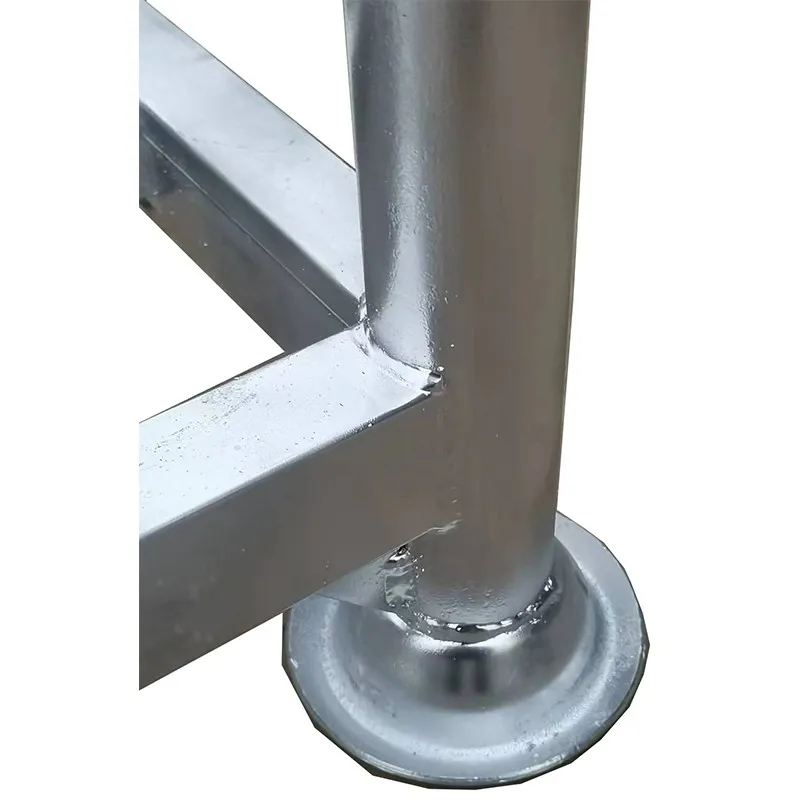
Now, when it comes to galvanzied stack racks, they're made from galvanized steel. Galvanization is a process where a layer of zinc is applied to the steel to protect it from corrosion. Zinc has a thermal conductivity of about 116 W/(m·K) at room temperature. Steel, on the other hand, has a thermal conductivity that can vary depending on its composition, but generally, it's around 45 - 55 W/(m·K).
The thermal conductivity of a galvanzied stack rack is influenced by a few factors. One of the main factors is the thickness of the galvanized layer. A thicker layer of zinc can potentially increase the overall thermal conductivity of the rack, as zinc is a better conductor of heat than some other coatings. However, the base steel also plays a significant role. If the steel has a high carbon content or other alloying elements, it can affect the thermal conductivity.
Another factor is the design of the stack rack. If the rack has a lot of open spaces or a complex structure, it can affect how heat is transferred through it. For example, a rack with a lot of ventilation holes might allow air to circulate more freely, which can either enhance or reduce the overall heat transfer depending on the surrounding conditions.
Let's talk about some real - world applications. If you're using a galvanzied stack rack in a cold room, the thermal conductivity becomes crucial. You want a rack that doesn't transfer too much heat from the outside environment into the cold room, as this can increase the energy consumption of the cooling system. Our Stack Rack for Cold Room is designed with this in mind. It has a structure that minimizes heat transfer while still providing enough strength to hold heavy loads.
In some industrial settings, where the stack racks are used to store hot materials, a higher thermal conductivity might be beneficial. It can help in dissipating the heat from the stored materials more quickly, preventing overheating. Our Galvanized Material Stack Rack is suitable for such applications, as it can handle the heat and transfer it efficiently.
If you need a stack rack that's easy to store when not in use, our Collapsible Galvanized Stack Rack is a great option. Even though it's collapsible, it still maintains a good balance of strength and thermal conductivity.
Now, you might be wondering how we measure the thermal conductivity of our galvanzied stack racks. We use specialized equipment to conduct tests. We place the rack in a controlled environment and measure the temperature difference across it when a known amount of heat is applied. By using the Fourier's law of heat conduction, we can calculate the thermal conductivity.
It's also important to note that the thermal conductivity can change over time. Factors like corrosion (even though the galvanized coating helps prevent it), wear and tear, and exposure to different environmental conditions can all have an impact. That's why we make sure to use high - quality materials and a proper galvanization process to ensure the long - term stability of the thermal conductivity.

In conclusion, the thermal conductivity of a galvanzied stack rack is a complex characteristic that depends on the materials, design, and application. Whether you need a rack for a cold room, industrial storage, or something else, we've got you covered.
If you're interested in purchasing our galvanzied stack racks, we'd love to have a chat with you. You can reach out to us to discuss your specific requirements and get a quote. We're here to help you find the perfect stack rack for your needs.
References
- Incropera, F. P., & DeWitt, D. P. (2002). Fundamentals of Heat and Mass Transfer. Wiley.
- Holman, J. P. (2010). Heat Transfer. McGraw - Hill.


