


In the logistics and warehousing industries, the choice of pallets is crucial for ensuring the safe and efficient movement of goods. Among the various types of pallets available, double faced steel pallets have gained popularity due to their durability, strength, and versatility. However, a common question that arises is whether double faced steel pallets are suitable for use in a high - temperature environment. As a supplier of double faced steel pallets, I will delve into this topic to provide a comprehensive answer.
Understanding Double Faced Steel Pallets
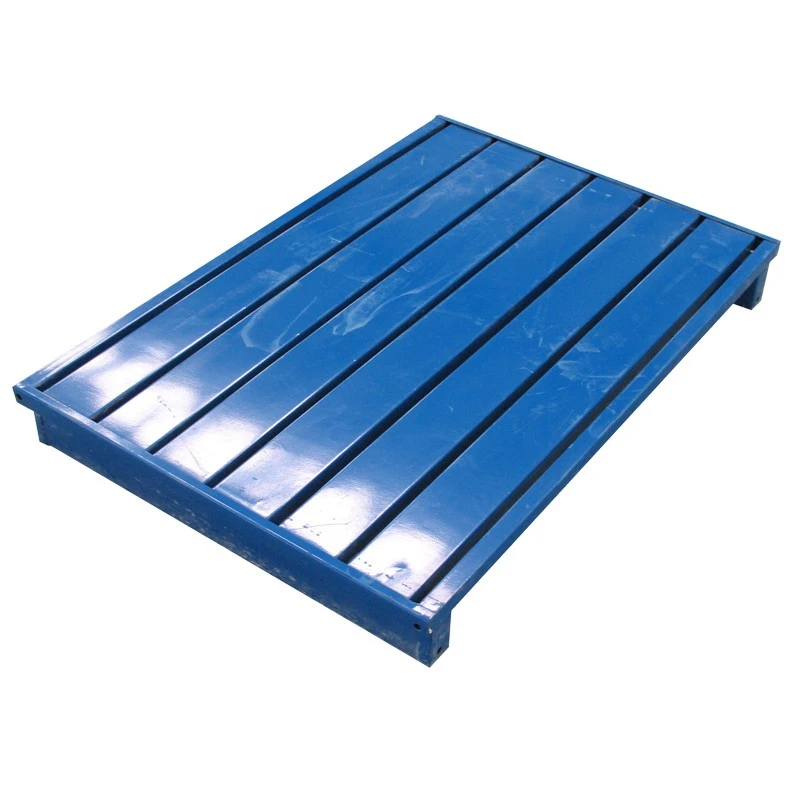
Double faced steel pallets are constructed with a solid steel frame and deck, offering a high load - bearing capacity. They are designed to be used on both sides, which increases their usability and flexibility. These pallets are resistant to corrosion, impact, and wear, making them ideal for heavy - duty applications. Compared to other types of pallets such as wooden or plastic pallets, steel pallets have a longer lifespan and can withstand more rigorous handling.
There are different variations of steel pallets, including Single Faced Steel Pallet, Zinc Galvanized Steel Pallet, and Powder Coated Steel Pallet. Each type has its own unique features and benefits, but they all share the basic characteristics of steel pallets.
The Impact of High - Temperature Environments on Steel Pallets
Physical Properties
Steel is a metal with relatively high melting and boiling points. In most high - temperature industrial environments, the temperatures are far below the melting point of steel. For example, the melting point of carbon steel is around 1425 - 1540 degrees Celsius. However, even at temperatures well below the melting point, steel can experience changes in its physical properties.
As the temperature rises, steel expands. This thermal expansion can cause dimensional changes in the double faced steel pallets. If the pallets are used in a confined space or are part of a tightly - integrated storage system, the expansion may lead to misalignment, jamming, or even structural damage. Additionally, high temperatures can reduce the strength and hardness of steel. The yield strength and tensile strength of steel typically decrease as the temperature increases. This means that the pallets may be more prone to deformation under load at high temperatures.
Corrosion
High - temperature environments are often accompanied by other factors such as humidity and the presence of corrosive substances. Steel is susceptible to corrosion, especially in the presence of moisture and oxygen. At high temperatures, the rate of corrosion can be accelerated. For example, in a hot and humid industrial environment, the oxidation process of steel can occur more rapidly, leading to the formation of rust on the surface of the pallets. Rust not only weakens the structural integrity of the pallets but also can contaminate the goods being transported or stored on them.
Coating and Finishes
Many double faced steel pallets are coated with zinc or powder coatings to enhance their corrosion resistance. However, high temperatures can have an impact on these coatings. Zinc galvanized coatings can start to degrade at relatively high temperatures. The zinc layer may oxidize or flake off, reducing its protective effect. Similarly, powder coatings can also be affected by high temperatures. The powder coating may lose its adhesion to the steel surface, crack, or discolor, which can compromise the aesthetic appearance and corrosion resistance of the pallets.

Suitability of Double Faced Steel Pallets in High - Temperature Environments
Despite the potential challenges posed by high - temperature environments, double faced steel pallets can still be suitable for use in certain situations.
Moderate High - Temperature Environments
In environments where the temperature is moderately high, say up to 100 - 200 degrees Celsius, double faced steel pallets can generally perform well. If the temperature is stable and the pallets are not subjected to excessive loads, the dimensional changes due to thermal expansion may be within an acceptable range. Additionally, if the environment is relatively dry and free of corrosive substances, the risk of corrosion can be minimized. In such cases, proper maintenance and inspection can ensure the long - term use of the pallets.
Specialized Applications
In some industries, such as the automotive or aerospace industries, high - temperature operations are an integral part of the manufacturing process. For these specialized applications, double faced steel pallets can be customized to withstand high temperatures. Special heat - resistant coatings can be applied to the pallets to protect them from oxidation and corrosion. These coatings are designed to maintain their integrity at high temperatures and provide an additional layer of protection for the steel.
Short - Term Use
If the exposure to high temperatures is only for a short period, double faced steel pallets can be a viable option. For example, in a heat - treatment process where goods are transported through a high - temperature zone for a brief time, the pallets can withstand the temporary heat without significant damage. As long as the pallets are allowed to cool down properly after the high - temperature exposure, their performance and lifespan will not be severely affected.
Mitigating the Risks in High - Temperature Environments
Material Selection
When using double faced steel pallets in high - temperature environments, it is important to select the appropriate type of steel. Some types of steel, such as stainless steel, have better heat resistance and corrosion resistance than carbon steel. Stainless steel contains alloying elements such as chromium and nickel, which form a protective oxide layer on the surface of the steel, preventing further oxidation and corrosion.
Coating and Finishes
As mentioned earlier, special heat - resistant coatings can be applied to the pallets. High - temperature paints or ceramic coatings can provide excellent protection against heat and corrosion. These coatings are designed to withstand extreme temperatures and can maintain their adhesion and protective properties over a long period.
Design Considerations
The design of the double faced steel pallets can also be optimized for high - temperature use. For example, allowing for some flexibility in the design to accommodate thermal expansion. This can be achieved by incorporating expansion joints or using a more open - frame design that allows the pallets to expand and contract freely without causing structural damage.
Conclusion
In conclusion, the suitability of double faced steel pallets in high - temperature environments depends on a variety of factors. While high temperatures can pose challenges to the physical properties, corrosion resistance, and coating integrity of the pallets, with proper material selection, coating, and design, they can still be used effectively in many high - temperature applications.
If you are considering using double faced steel pallets in a high - temperature environment, it is important to carefully assess your specific requirements and consult with a professional. As a supplier of double faced steel pallets, we have extensive experience in providing customized solutions for different industrial applications. We can help you select the most suitable pallets and provide advice on how to mitigate the risks associated with high - temperature use. Contact us today to discuss your procurement needs and start a fruitful business negotiation.
References
- ASM Handbook Volume 2: Properties and Selection: Nonferrous Alloys and Special - Purpose Materials. ASM International.
- Steel Construction Manual. American Institute of Steel Construction.
- Corrosion Basics: An Introduction. National Association of Corrosion Engineers (NACE).


