


What is the heat transfer characteristic of stack racks in cold rooms?
As a supplier of Stack Rack For Cold Room, I've witnessed firsthand the importance of understanding the heat transfer characteristics of these racks. In cold rooms, maintaining a consistent low temperature is critical for preserving the quality of stored goods. Stack racks play a significant role in this process, and their heat transfer properties can have a substantial impact on energy efficiency and overall performance.
1. Basics of Heat Transfer in Cold Rooms
Before delving into the heat transfer characteristics of stack racks, it's essential to understand the three primary modes of heat transfer: conduction, convection, and radiation.
Conduction is the transfer of heat through a solid material. In the context of stack racks, the materials used in their construction, such as steel or aluminum, can conduct heat. For example, if the rack is in contact with a warmer surface, heat will flow from the warmer area to the cooler area of the rack.
Convection involves the transfer of heat through the movement of fluids (liquids or gases). In a cold room, air circulation is crucial. Cold air sinks, and warm air rises. Stack racks can either enhance or impede this natural air movement. If the racks are designed in a way that allows for proper air circulation, it can help distribute the cold air evenly throughout the room.
Radiation is the transfer of heat through electromagnetic waves. Objects in the cold room, including the stack racks, emit and absorb radiation. Dark - colored racks may absorb more radiation than light - colored ones, which can affect the temperature inside the cold room.
2. Heat Transfer Characteristics of Stack Racks
Material - related Heat Transfer
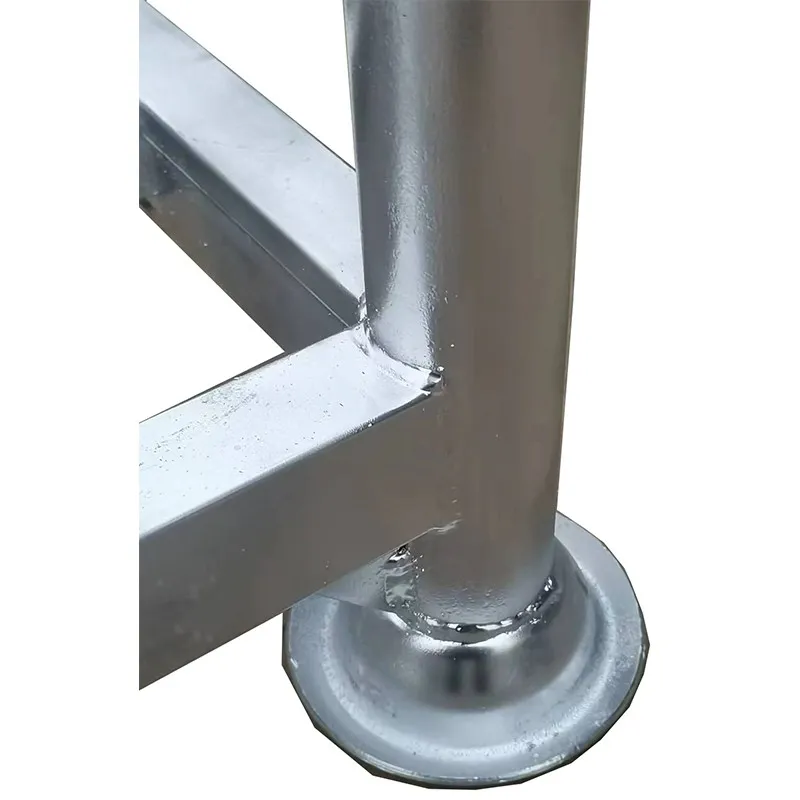
The material of the stack rack is a key factor in its heat transfer characteristics. Galvanized materials are commonly used in stack racks for cold rooms. Galvanized Material Stack Rack offers several advantages in terms of heat transfer. Galvanization is a process of coating steel with zinc, which not only provides corrosion resistance but also affects heat conduction. Zinc has a relatively low thermal conductivity compared to some other metals. This means that galvanized stack racks can act as a barrier to heat transfer to some extent.
Hot - dip galvanized stack racks, like the Hot Dip Galvanized Stack Rack, have a thicker zinc coating. This thicker coating can further reduce heat conduction through the rack. However, it's important to note that the overall heat transfer also depends on the thickness and structure of the steel beneath the zinc coating.
Design - related Heat Transfer
The design of the stack rack can significantly influence heat transfer. A well - designed stack rack allows for efficient air circulation. For example, racks with open - frame designs or perforated panels can promote better convection. When cold air can flow freely around the stored items on the rack, it helps to maintain a more uniform temperature.
On the other hand, a poorly designed rack with a closed or densely packed structure can create stagnant air pockets. These pockets can trap warm air, leading to uneven temperature distribution in the cold room. This not only affects the quality of the stored goods but also increases the energy consumption of the cooling system as it has to work harder to maintain the desired temperature.

3. Impact on Energy Efficiency
The heat transfer characteristics of stack racks have a direct impact on the energy efficiency of cold rooms. If the racks conduct heat easily, more heat will enter the cold room from the surrounding environment. This means that the cooling system has to work harder to remove the excess heat, resulting in higher energy consumption.
By using stack racks with low - heat - transfer materials and proper designs, the amount of heat entering the cold room can be minimized. For example, Stack Rack for Cold Room designed with energy - efficient principles can help reduce the load on the cooling system. This not only saves energy but also reduces operating costs in the long run.
4. Considerations for Cold Room Operators
Cold room operators need to consider several factors when choosing stack racks based on heat transfer characteristics.
Firstly, they should assess the type of goods to be stored. Different products have different temperature requirements. For example, perishable food items may require a more precise and stable temperature environment. Stack racks that can minimize heat transfer are crucial for maintaining the quality of these products.
Secondly, the size and layout of the cold room also matter. A large cold room may require a different type of stack rack design compared to a small one. The rack should be able to fit well within the room and allow for efficient air circulation.
Finally, cost - effectiveness is an important consideration. While high - quality stack racks with good heat transfer characteristics may have a higher upfront cost, they can save money in the long term through reduced energy consumption.
5. Future Trends in Stack Rack Design for Cold Rooms
As the demand for energy - efficient cold storage solutions continues to grow, there are several emerging trends in stack rack design.
One trend is the use of advanced materials with even lower thermal conductivity. Researchers are exploring new alloys and composite materials that can provide better insulation and reduce heat transfer.
Another trend is the integration of smart technologies. Stack racks can be equipped with sensors to monitor temperature and air circulation. This data can be used to optimize the operation of the cold room and ensure that the racks are functioning at their best.
6. Contact for Procurement
If you are in the market for stack racks for your cold room, we are here to help. Our stack racks are designed with the latest knowledge of heat transfer characteristics to ensure optimal performance and energy efficiency. Whether you need Galvanized Material Stack Rack, Stack Rack for Cold Room, or Hot Dip Galvanized Stack Rack, we have a wide range of options to meet your needs. Contact us to discuss your specific requirements and start a procurement negotiation.
References
- Incropera, F. P., & DeWitt, D. P. (2002). Fundamentals of Heat and Mass Transfer. John Wiley & Sons.
- ASHRAE Handbook: Refrigeration. American Society of Heating, Refrigerating and Air - Conditioning Engineers.
- Bejan, A. (2004). Convection Heat Transfer. John Wiley & Sons.


